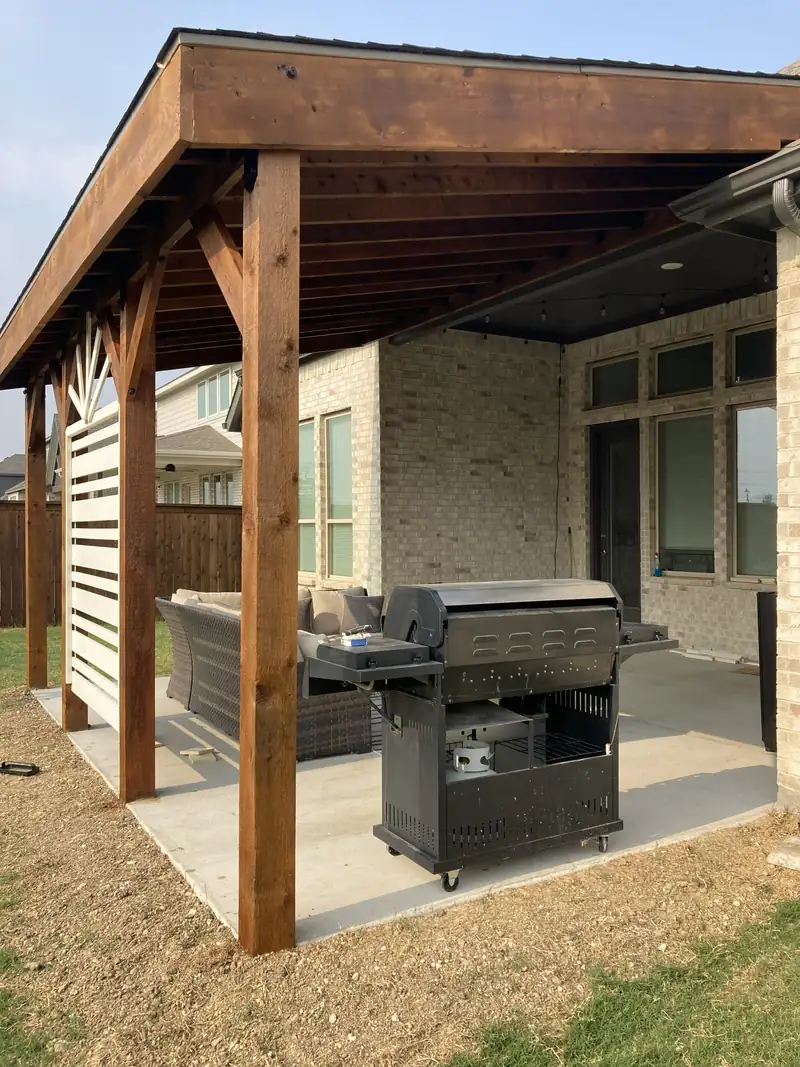
Concrete patio under a cedar patio cover with a horizontal privacy screen

Concrete patios in Dallas–Fort Worth

Broom finish, stamped, stained and exposed aggregate, poured with the slope, drainage and joints planned before a single truck shows up.

What we build

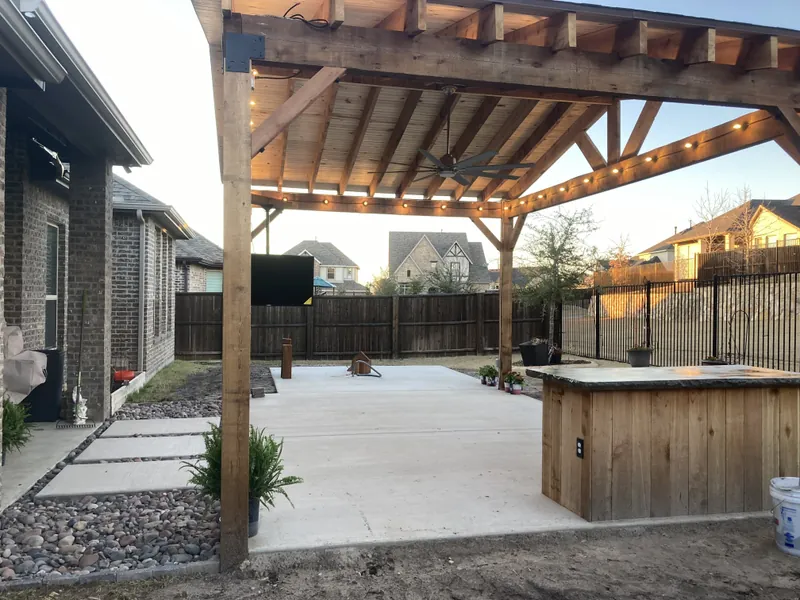
Cedar patio cover with string lights over a large concrete patio and a wood-clad outdoor bar

Broom finish

The workhorse. Textured for grip, clean-looking, and the most cost-effective surface per square foot.

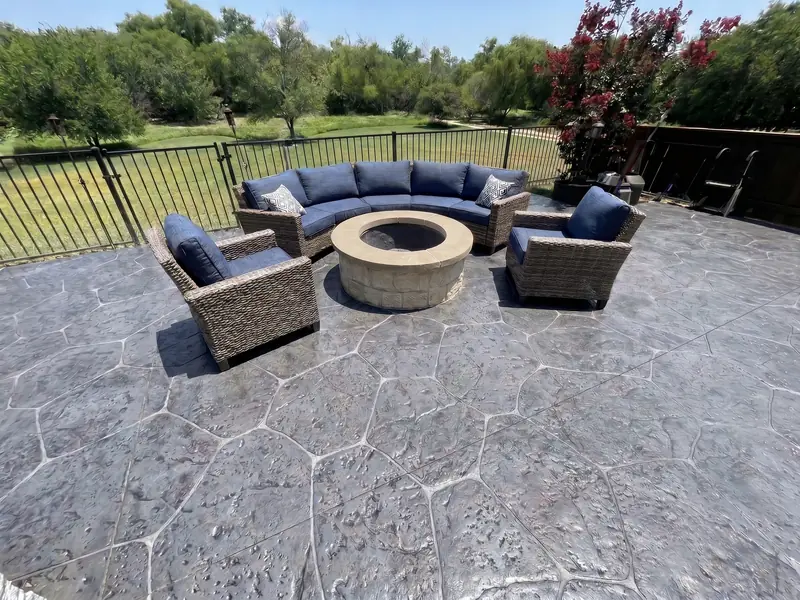
Design example: Stamped concrete patio with a fire pit and outdoor seating

Stamped

Patterned to read as stone, slate or brick at a fraction of the cost of the real thing.

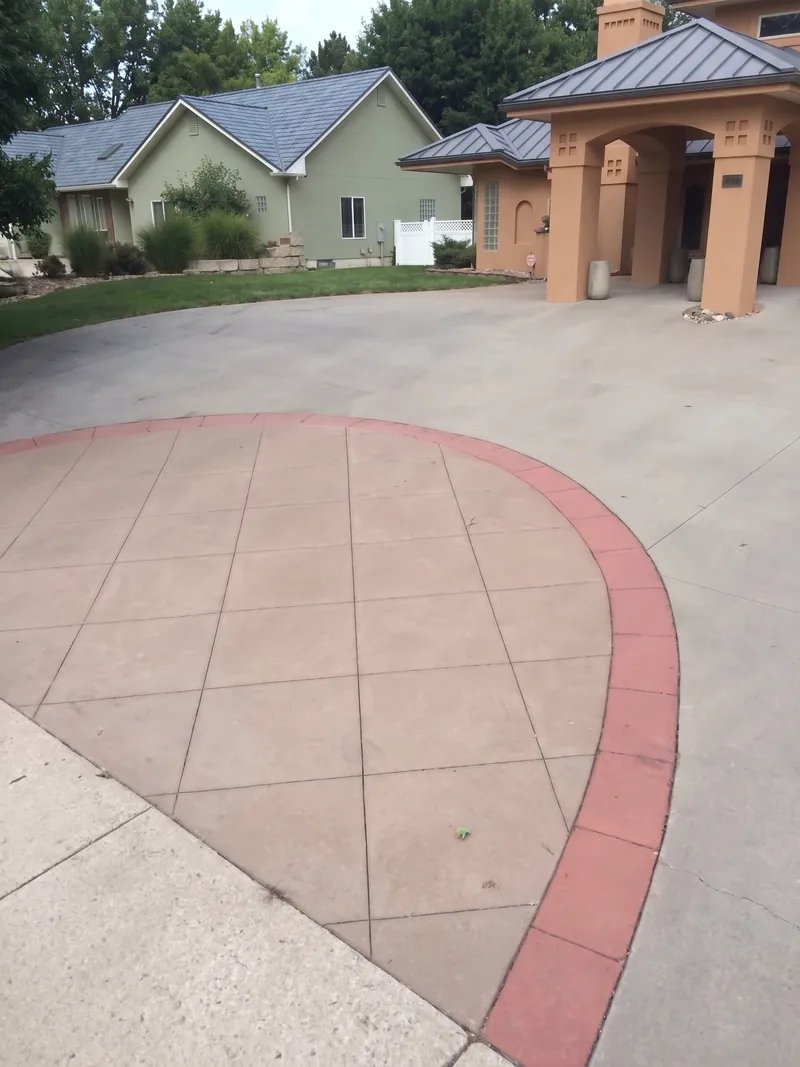
Design example: Stained concrete drive with a red border band

Stained and colored

Color worked into or applied to the slab. Warmer than gray, and it pairs well with stamping.

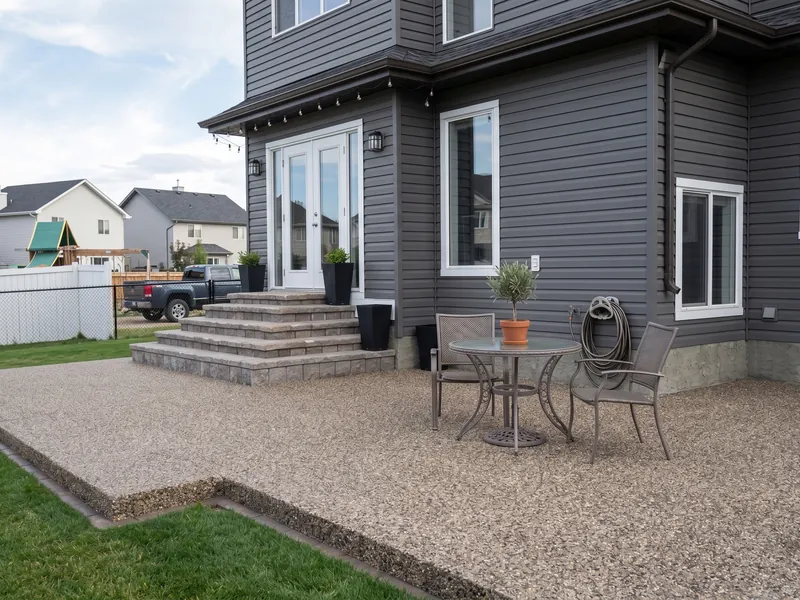
Design example: Exposed aggregate concrete patio with steps at the back of a house

Exposed aggregate

The stone in the mix becomes the finish. Durable, grippy, and it hides wear better than a smooth surface.

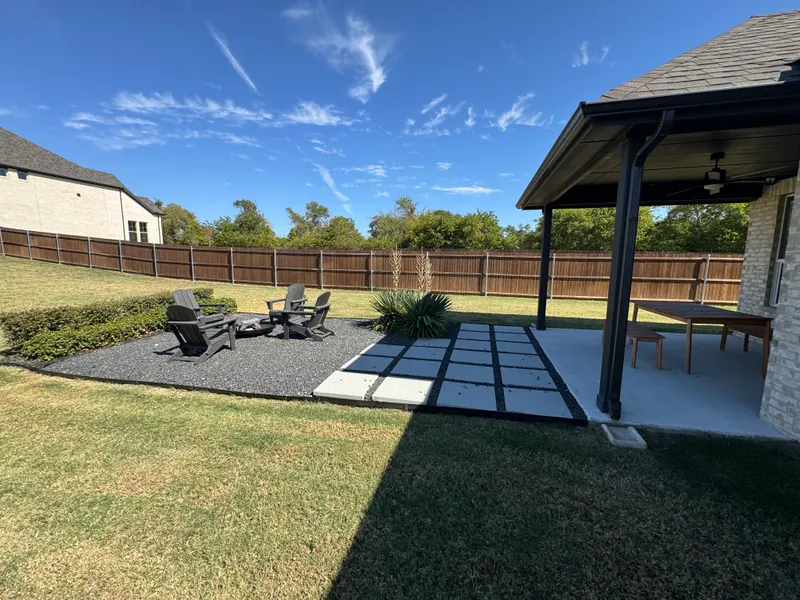
Concrete patio slab extended beyond a covered patio, with square pads and a gravel seating area

Slab extensions

Making an existing patio bigger. Read the next section before you assume this is the cheap option.

Extend the old slab, or tear it out?

This is the question almost everyone with an existing patio has, and the wrong answer is expensive.

We can tie new concrete to an existing slab if the old one has only minimal cracking and isn't leaning. If it's significantly cracked, broken, or tilting, joining new work to it means the old slab drags the new one along with it, and in a year or two you've paid for new concrete that's cracking and leaning for the same reason the old one did.

We'll tell you which situation you're in before you spend anything. Sometimes reusing it is genuinely the right call and saves you real money. Sometimes it's the most expensive thing you can do.
Concrete cracks. The job is deciding where.

Every slab in North Texas will crack. That's not a defect and it's not a contractor failing. It's physics, and it's what this clay does when it swells and shrinks with the seasons.

What separates a good slab from a bad one is control. We cut joints in the right places at the right time, so when the concrete moves it separates along a clean line you barely notice instead of tearing an ugly crack across the middle of your patio.

Anyone who tells you their concrete won't crack is either inexperienced or not being straight with you.

Where the water goes

A patio needs slope. Not enough to notice underfoot, just enough that water leaves instead of sitting.

We set the slope so water runs in the direction your yard already drains, rather than toward your house or into a low spot that turns into a puddle after every storm. Where the site needs more than slope alone, we build drainage into the design.

This is invisible when it's done right and obvious the first time it rains when it isn't.

How to read a bad slab

Drive around any DFW neighborhood and you can spot the rushed pours. Here's what to look for, on our work and on anyone else's:

  • Large cracks rather than clean separations along a cut joint
  • The slab isn't flush where it meets the house a lip or a gap at the threshold
  • Visible breaking at edges or corners
  • Tilting the slab has moved as a unit, which means the base underneath wasn't right

How a job goes

  1. You reach out.

    Call, text or the form. You hear back within 24 hours.

  2. We walk the yard.

    We listen to what you want before we talk about what it costs.

  3. You get the PDF.

    Written scope, inclusions, exclusions, price.

  4. Permits and materials.

    We start on approvals immediately and order anything with a lead time.

  5. We build.

    Then we walk it with you.

Recent work

Gallery
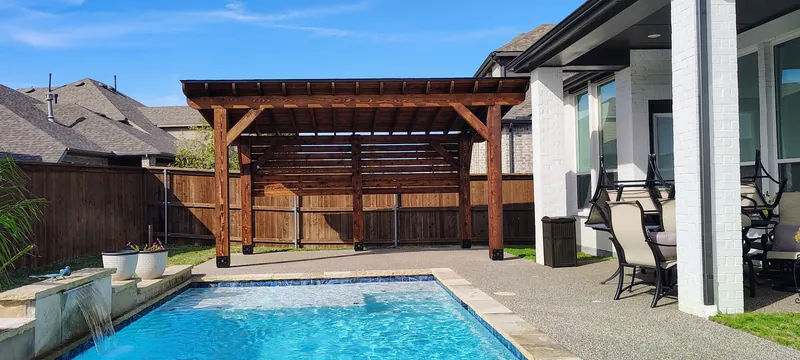
Concrete patio under a cedar patio cover with a horizontal privacy screen
Concrete patio under a cedar patio cover
Concrete patio slab extended beyond a covered patio, with square pads and a gravel seating area
Concrete slab extension
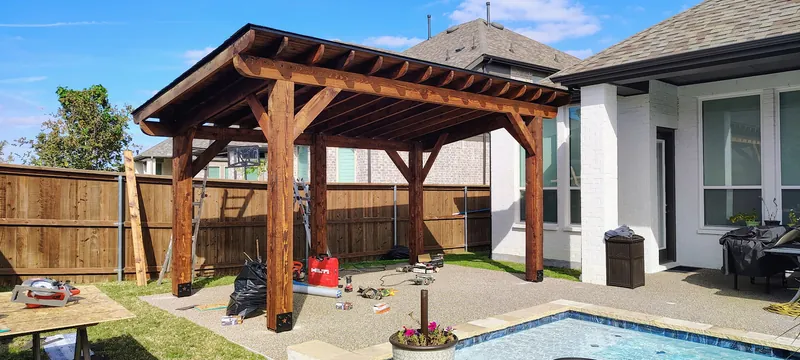
Cedar pergola beside a backyard pool
Cedar pergola by the pool
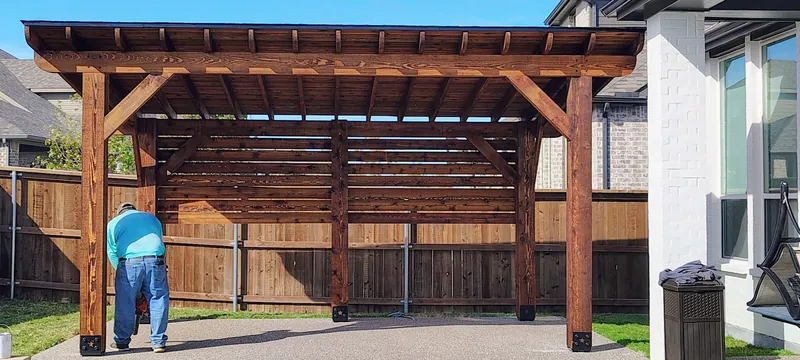
Crew member fastening a freestanding cedar pergola next to a backyard pool
Freestanding cedar pergola
Freestanding cedar pergola over an exposed aggregate patio beside a pool
Pergola over exposed aggregate patio
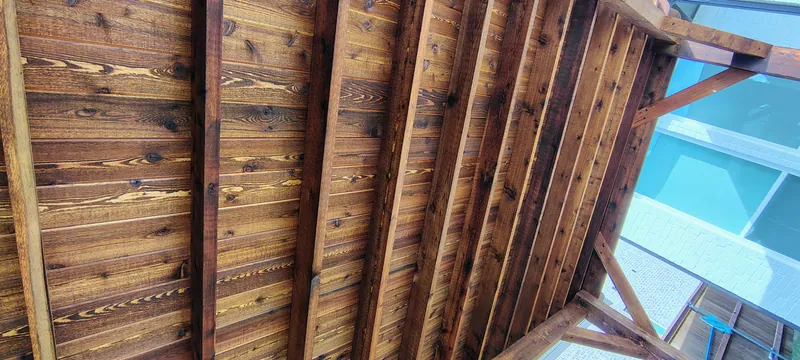
Stained cedar rafters of a freestanding pergola, seen from below
Stained cedar rafters

Questions

What does a concrete patio cost?

Priced per square foot and driven by finish, thickness, reinforcement and site conditions. Decorative finishes like stamped, stained and exposed aggregate cost more than a broom finish. Ask for the finish as a separate line so you can compare quotes properly. Ours is written out that way by default.

How long before I can use it?

You'll get a specific timeline for your pour. Decorative finishes and sealers add time.

Do you seal it?

Stamped and decorative finishes need periodic resealing to hold their color. We'll tell you the cycle for your finish.

Do I need a permit?

A plain patio pad often doesn't, but it varies by city and by size. Anything structural does. We confirm it for your address.

Can you pour the slab and build the cover?

Yes, and it's better done together. Footings for a pergola or patio cover get planned before the pour instead of cut into finished concrete afterward.

Can you match my existing concrete color?

Concrete of different ages never matches exactly. We'll be straight with you about how close we can get.

Cost, timeline, insurance

What does a project cost?

Depends on size, materials and what your yard is doing. Cedar privacy fence, concrete patio and pergola all sit in wide ranges across DFW, and any contractor who gives you a firm number without walking the property is guessing. We walk it, then you get a written number that doesn't move.

Will you come down on price?

The number is the number. If it's more than you want to spend, we'll change the scope. Fewer feet, a different finish, pine instead of cedar, and we re-quote it honestly. We don't discount, because a price that moves when you push it was never a real price.

How long will it take?

The build itself is usually days, not weeks. What moves the calendar is permitting, which takes a few days to two weeks depending on the city, and HOA review, which runs on their schedule. We start on both immediately and order long-lead materials the same day.

Do I need a permit?

Often, especially for anything attached to the house or with electrical. We confirm the requirement for your address and handle the submittal.

Doing more than one thing?

Most of our patio customers end up asking about shade. Building the cover and pouring the slab as one project means the footings are designed in from the start, and it costs less than coming back for it later. See pergolas and patio covers

Tell us what you're thinking about.

No pressure, no sales rep. You'll talk to the people who run the job.

Get your free estimate

We answer within 24 hours. Every time, even if it's to tell you we're not the right fit.